
Every year, Spain bursts into life with music, color, and excitement as towns and cities turn into giant stages due to the Spanish carnival celebrations. Coastal cities are filled with energy as people wear costumes, join parades, and fill public squares with laughter and dancing. Each region celebrates in its own way; some with humor, some with elegance, and some with bold, colorful shows. The streets smell of food, the sound of drums fills the air, and confetti sparkles everywhere. Carnival in Spain shows local traditions, creativity, and freedom, and it is the perfect time to visit the coast and experience the country at its most vibrant.
The History of Carnival in Spain
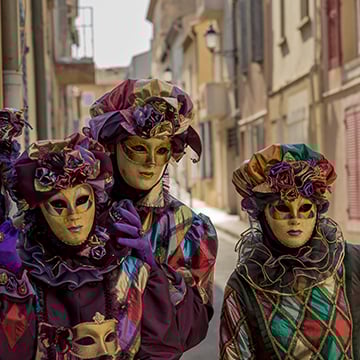 Carnavals in Spain began as a religious tradition tied to the Christian calendar. It takes place right before Lent, which gives the week the name “pre-Lent celebrations in Spain”. For this reason, people used Carnival as a final chance to enjoy rich food, loud music, and public fun. Over time, the celebration also became a space for humor and protest. During Franco’s dictatorship, Carnival was banned because masks and jokes about leaders were seen as dangerous. Still, many towns continued the tradition in secret. After democracy returned, Carnival came back stronger, so today it stands for freedom and shared identity.
Although Carnival exists in many countries, the Spanish version has a unique purpose and tone. It focuses less on luxury and more on humor, social critique, and community participation. This difference becomes clearer through comparison.
Carnival in Spain vs Brazil or Italy
Feature | Spain | Brazil (Rio) | Italy (Venice) |
|---|---|---|---|
| Main Focus | Satire and humor | Dance and spectacle | Elegance and mystery |
| Key Element | Singing groups (chirigotas) | Samba schools | Decorative masks |
| Costume Style | Funny and handmade | Bright and grand | Historical and formal |
| Social Role | Mocking power | Cultural pride | Social escape |
What Happens in Carnival in Spain?
The spirit of Carnival in Spain lives in the streets. Here are some of the Spanish carnival traditions:
- Carnival costumes in Spain: Outfits often tell a joke or send a message, and many are homemade.
- Parades in Spain: Crowds move through the streets, and spectators often join in.
- Spanish Music: Songs comment on politics, culture, and daily life.
- Revelry: Laughter, dancing, and public gatherings fill the nights.
Famous Towns in Spain for Carnaval
If you are asking, “Is carnival celebrated all over Spain?”, the answer is mostly yes. Carnival in Spain is not one event. It is many events happening at the same time across the country. Carnival always leads up to Ash Wednesday, which falls on February 18, 2026. Because of that fixed religious date, cities all over Spain schedule their main events during the same week. This means that on the same night, you can find parades, concerts, costume contests, and street parties happening in many places at once.
The Best Carnival Celebrations in Spain: Weekly Overview
| City / Region | Main Focus | Where Events Happen | What It’s Known For | Length of Celebration |
|---|---|---|---|---|
| Alicante | Street parties, satire, fire shows | Rambla de Méndez Núñez, Plaza del Carmen, old town | Correfoc, Sábado Ramblero, Entierro de la Sardina | About 1 week |
| Torrevieja | Community groups, family parades | City center, Calle Ramón Gallud | Comparsas, costume competitions | Several weeks |
| Málaga | Large parades, concerts, street life | Historic center, Plaza de la Constitución | Drag Queen Gala, big parades | About 10–12 days |
| Marbella | Local parades, children’s events | Old Town, main avenues | Neighborhood parades, Burial of the Sardine | About 1 week |
| Barcelona | Neighborhood celebrations | Gràcia, Sants, Ciutat Vella | Rei Carnestoltes, satire, local parades | About 1 week |
| Sitges | Night parades, LGBTQ+ culture | Seafront promenade, city center | Huge costume parades | About 1 week |
| Cádiz | Satirical music, street humor | Old town, plazas, theaters | Chirigotas, comparsas | 2+ weeks |
Canary Islands | Massive parades, global tourism | Santa Cruz de Tenerife, Las Palmas | Carnival Queens, Drag Galas | Over 1 month |
Costa Blanca Carnival Celebrations
The Costa Blanca, located in the province of Alicante, offers high-energy city parties and strong carnaval traditions in Spain. These two sides coexist side by side, allowing visitors to choose their own pace. The region attracts travelers who want loud street celebrations but also quiet neighborhood events.
Alicante Carnival
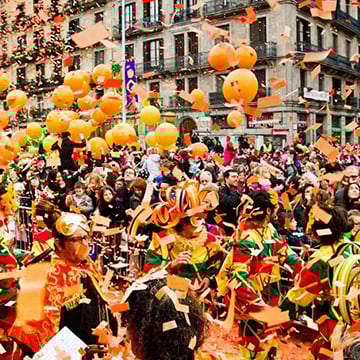 Alicante’s Carnival transforms the historic center, known as El Barrio, and the Rambla de Méndez Núñez into a citywide stage. Streets that usually feel calm turn loud and crowded. Music fills the air, costumes take over public spaces, and daily routines disappear.
The celebration begins with Dijous de Gras and the Correfoc, which announce that Carnival has arrived. Fire becomes the main symbol of this night. The Ball de Diables runs through the streets with sparks, drums, and fireworks, while crowds follow closely behind. The Arribada del Momo marks the official entrance of Carnival’s spirit, a figure tied to chaos, humor, and misrule.
The emotional center of the week arrives with Sábado Ramblero, the most important social event of the festival. Rambla Méndez Núñez closes to traffic and becomes a massive open-air party. Thousands of people gather in costume, and music plays late into the night. Families arrive early, but younger crowds stay until morning.
The festival then moves toward its ending with the Entierro de la Sardina. A mock funeral procession carries a giant sardine through the city. The figure is burned in a dramatic ceremony that symbolizes the end of excess and the return to normal life.
Torrevieja Carnival
Torrevieja offers a slower and more community-centered Carnival than nearby cities. The celebration lasts almost a full month, and families and neighborhood groups shape the experience. It began in the late 1980s as a small local dance, but it later grew into a major festival with official tourism status. At the heart of everything are the comparsas. These groups of neighbors spend the entire year designing costumes, planning themes, and rehearsing performances, which gives each event a strong sense of care and purpose.
The public season begins with the Pregón del Carnaval at the Teatro Municipal. This opening ceremony welcomes residents and visitors, and it announces that Carnival has officially started. Soon after, the Grand Carnival Parade takes over the streets. This is the most important daytime event of the season. Large groups move through the city in detailed costumes, and many perform choreographed routines. Crowds line the route for hours, so the streets stay lively and full of energy.
Later, the celebration reaches its peak with the Night Carnival Parade. Lights, louder music, and dramatic designs change the mood, and the city feels more intense and theatrical. The season then closes with the national competition for comparsas and chirigotas. These groups perform musical and comedic routines that comment on daily life and social issues.
Costa del Sol Carnival Celebrations
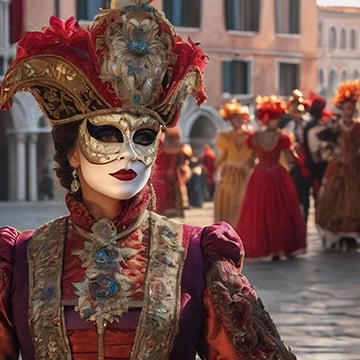 The Costa del Sol offers a bright coastal setting for Carnival celebrations. The seaside carnivals in Spain range from Málaga’s sharp humor to Marbella’s elegant style. Each city has its own traditions, and each one shapes how carnival is celebrated in Spain.
Málaga Carnival
Málaga’s Carnival is a celebration of humor, creativity, and playful rebellion. Locals proudly call themselves Boquerones, or anchovies, and this symbol appears throughout the festival.
The season begins with the Pregón de Carnaval, the official opening ceremony. Held in Plaza de la Constitución, it welcomes residents and visitors alike. Speeches, rituals, and the selection of Carnival gods announce the start of the festivities.
The Gran Desfile de Carnaval is the centerpiece of the celebration, and it is held in Paseo del Parque, one of the best areas to celebrate carnival in Málaga. Floats, performers, dancers, and large costume groups parade through the streets, entertaining the crowds. Families line the route to watch, cheer, and take photos. The displays are rich with color and theatricality, and performers often use satire, dance, and music to create lively, engaging spectacles. This parade captures the spirit of Málaga’s Carnival and draws the largest daytime audience of the festival.
The Batalla de Flores and Costume Night represents the peak of visual and social celebration. Calle Larios becomes a stage of confetti, flowers, and flamboyant costumes. Street performances, live music, and parties fill the night, and the energy in the city reaches its highest point.
The festival concludes with the Entierro del Boquerón, a symbolic farewell to Carnival. A giant anchovy figure is paraded through the city and carried to La Malagueta beach, where it is burned.
Marbella Carnival
Marbella offers a sophisticated version of Carnival. The city hosts beachfront celebrations and elegant social events, which give the festival a more upscale feel.
The season begins with the Official Opening Ceremony and Pregón, where the city is formally invited to celebrate. The event introduces Marbella’s Carnival royalty, including Venus and her court, and features live performances by local chirigotas and comparsas. This ceremony sets the tone for the entire festival.
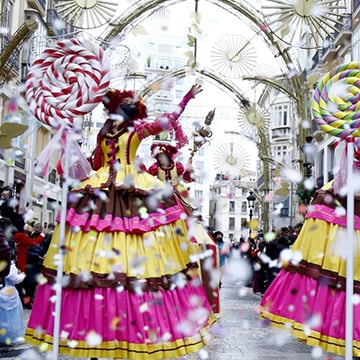 The Comparsa and Chirigota Performances follow throughout the Carnival. These musical and comedic groups perform in theaters and public spaces across the city. Their songs are playful, satirical, and often comment on local life, politics, and current events. Each performance is carefully prepared and gives the audience a chance to enjoy the artistry and humor of the festival before the large parades begin.
The Humor Parade (Desfile del Humor) is the highlight of Marbella Carnival. The main avenues are filled with bright floats, elaborate costumes, and choreographed groups. Spectators line the streets, cheer, and take photos, creating a lively and interactive atmosphere.
The season concludes with the Closing Celebration, a symbolic farewell to Carnival. The final events include performances, humor acts, and gatherings in central locations, allowing the city to say goodbye to the festive period.
Barcelona and Catalonia Coast Carnivals
Barcelona Carnival (Carnaval de Barcelona)
Carnivals in Barcelona transform the city into a theatrical stage. Streets across every district fill with music, color, and laughter. Costumes and masks take over public spaces in the carnival festival in Barcelona.
The festival begins with Fat Thursday, called Dia de la Truita. People eat Botifarra d’ou and Coca de Llardons, and the Taronjada launches the celebrations. Orange-colored balloons and confetti fly in front of the Sants District Headquarters, recalling the old tradition of throwing oranges.
Over forty parades move through neighborhoods like Gràcia, Sant Andreu, and Sants. Music, dance, and dramatic costumes fill the streets, and crowds cheer from every corner. Families and friends gather to enjoy the spectacle. The festival ends with smaller performances and neighborhood parades. Masked dances and music continue in public squares, and the streets stay vibrant until the last show.
Sitges Carnival
Sitges hosts one of Spain’s most famous and inclusive Carnivals, designated among the top ten carnivals globally. The coastal town transforms into a stage of color, music, and dance. The celebration has deep roots, tracing back to at least the 15th century, though the modern festival emerged in the late 19th century. Rivalries between local societies poured energy and creativity into elaborate floats, costumes, and performances, a tradition that continues today. The carnival also preserves its original religious meaning, marking the last indulgence before Lent, from symbolic burials to ceremonial presentations.
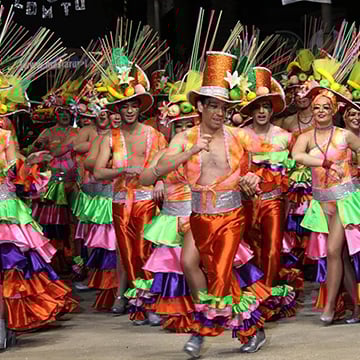 The Rua de la Disbauxa, or Debauchery Parade, is the first main nighttime event. Over fifty floats move along the seafront promenade and through medieval streets. Thousands of costumed participants perform choreographed routines, and music drives the festive energy. A children’s version occurs earlier in the day, letting young participants celebrate safely.
The Rua de l’Extermini closes the celebration. It follows the same route as the Disbauxa but with higher energy and more dramatic displays. Bright floats, daring costumes, and pounding music create a nonstop party that lasts into the night. The name reflects the symbolic end of carnival excess, and the parade leaves the town buzzing as it transitions toward the solemnity of Ash Wednesday.
Living Life the Spanish Way
The Spanish Carnival reflects the true Spanish fiesta lifestyle. People have siestas to rest and fiestas to celebrate, and daily life moves with a rhythm that encourages celebration. Living on the Spanish coast adds its own energy because long walks by the sea, lingering sobremesas, and community gatherings fill every day with enjoyment. Explore Spain for yourself, and buy property in Spain to make the joy, culture, and vibrant coastal life yours every day.


 EUR
EUR


