
Dutch buyers have overtaken the leading spot among foreign buyer nationalities in Spain. Previously, Germany and the UK had long dominated the market. Now, according to the latest data for 2025, both have been overtaken by the Netherlands, which has posted consistent year-on-year growth. This doesn't mean the Spanish housing market is going through a major shake-up, but it is mostly reshuffling among the three biggest foreign buyer nationalities.
The Rise and Dominance of Dutch Investors in Spain’s Housing Market
 The presence of the Netherlands among the top foreign buyer nationalities has been gradually increasing, and 2025 was the year it became official. Dutch buyers purchased 6,289 properties across Spain over the full year, putting them narrowly ahead of Germany (6,233) and the United Kingdom (6,152) for the first time.
That gap is close, but the trend lines around it tell the real story. British buyer activity has been steadily declining for some time now. While the UK remains one of the largest groups of foreign buyers in the Spanish housing market, the after-effects of Brexit are catching up with them. British buyers' transactions fell by 8.5% year-on-year during 2025, despite showing modest improvement in the final quarter. It is also true for Germany, whose purchases fell 2.6% compared to 2024.
Dutch buyers, on the other hand, continue to increase their share. When resident and non-resident transactions are combined, the total property purchases climb to 8,354 in 2025. And this marks a 12.2% year-on-year increase. They were also the only major nationality that recorded both a year-on-year and a quarter-on-quarter increase.
Where Are the Dutch Buying Property in Spain?
Like many foreign buyers, the Dutch also gravitate toward coastal spots. But there is also a specific preference at play. Dutch citizens buying property in Spain concentrate mainly in Costa Blanca (Alicante) and Málaga, with Girona emerging as a third hotspot.
Alicante, the Epicenter of Demand
 While Costa Blanca is popular, Alicante is leading in foreign demand. Dutch buyers rank third here, right after the British and Germans. They have been focusing on micro-locations, including Jávea and northern Costa Blanca towns. Dutch investors have been reshaping the luxury property market in this area.
Málaga, the Luxury Anchor
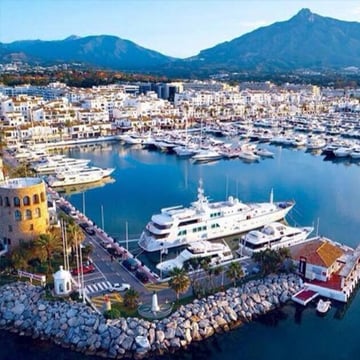
Dutch buyers also remain active in this province, home to some of the best marinas and luxury ports in Spain. They buy mostly luxury second homes, and among the best coastal towns in Spain for Dutch buyers are Marbella, Estepona, and Mijas.
Girona, a Rising Name on Costa Brava
A growing favorite among international buyers, Girona is more affordable by comparison. Dutch citizens buying homes here rank among the top three, alongside the French and Germans. The appeal is straightforward: the area is easily accessible from Western Europe, and a growing international community makes it easier for newcomers to settle in.
Why Are Dutch Buyers Investing in Spain? What's Driving the Surge
Dutch property buyers, at large, can have varying motivations, ranging from lifestyle relocation to purely financial investment. But overall, Spain's broader appeal to European buyers plays a role too.
For many Dutch citizens buying property and moving with their families, Spain offers a solution to the high taxes, long winters, and increasing density in their home country.
Living costs and real estate prices in Spain remain relatively lower than in the Netherlands. It is especially evident when comparing Dutch hubs like Amsterdam and Utrecht to prime coastal destinations in Spain. The same price of a modest apartment back home can buy a luxury villa in premium spots. So most Dutch buyers choose Spain for a purchase that is both emotionally rewarding and retains the value of their capital.
Lifestyle plays a major role, as the trends show a shift toward a relocation mindset rather than a purely transactional one. And they do it gradually, testing the waters part-time first and then moving permanently. Most start with second homes to use during holidays and expand their stay gradually. Plus, Eurozone transactions make cross-border purchases far simpler for Dutch buyers.
How Dutch Citizens Buy Property in Spain
Buying property in Spain as a Dutch citizen can look quite different from purchasing one in the Netherlands. Two of the biggest differences are Spain's contrato de arras, which requires a 10% deposit, and the financing process itself.
Financing a Property in Spain: Mortgage Options for Dutch Buyers
 Most Dutch purchase homes with equity or cash, but those seeking financing face a different system in Spain. Dutch banks tend to offer more flexible interest rates and terms than what's available to non-residents in Spain. So many buyers release equity from their primary home first and use that capital to fund the purchase abroad.
Dutch citizens can get a mortgage in Spain, too. However, as a non-resident, the terms are notably stricter. The main mortgage differences between borrowing from Dutch banks and Spanish banks as a foreigner are as follows:
• Loan-to-value can reach up to 100% in the Netherlands, while Spanish banks offer up to 60% for non-residents.
• Age limits are flexible in the Netherlands, while Spanish banks typically cap borrowing by age 70 or 75.
• Dutch banks allow mortgage interest deduction, while there is no equivalent relief for foreigners buying a second home in Spain.
What Do the Dutch Prioritise When Buying a Home
Dutch buyers tend to prioritise larger spaces and convenience over city-center proximity. That said, move-in-ready new builds are also highly sought after. These come with minimalistic, clean aesthetics as well as energy efficiency built in.
Outdoor living and green spaces are also a major draw. Coming from a densely populated home country, they favor large terraces, open-plan layouts, and homes designed to maximize sunlight.
Proximity to an airport is another key factor. They prioritise homes that are under an hour's distance from airports that offer direct flights to destinations in the Netherlands.
Additionally, Dutch digital nomads look for high-speed internet and reliable connectivity.
Tax Implications of Owning Second Homes in Spain for Dutch Citizens
 With the Double Taxation Treaty between the Netherlands and Spain, buyers can avoid being taxed twice on the same property or income. That said, the way each country calculates and applies tax still differs significantly.
Since the primary right to tax your home lies where it is physically located, Spain retains the first claim on taxing the property. For the Netherlands side, you need to explicitly declare its market value on your annual tax return under Box 3. While secondary real estate is taxed alongside other assets, since there is a treaty, authorities grant a proportional tax deduction.
In Spain, your tax responsibilities depend on how you use your home. First of all, no matter the usage, Dutch buyers must file Non-Resident Income Tax annually. If the home is empty or used exclusively by the family, tax is calculated on a deemed rental value, which is 1.1%–2% of the property's cadastral value. For Dutch citizens renting out their property, a flat 19% tax rate is applied to their rental income. As an EU citizen, though, tax deductions on certain expenses are available.
For more information on this topic, check out our guide on taxation in Spain.
What Does the Rise of Dutch Investors in Spain Tell Us Going Forward
This shift to Dutch dominance is not a coincidence. It can be clearly seen that this momentum has been building for years, with a clear value-driven approach and increasing interest in specific micro-locations. Dutch buyers come with practical priorities and enter the market with realistic expectations. They are aware of possible challenges and risks, and they think long-term when choosing a Spanish home to buy.
Now, whether they will remain as the leading nationality or German and UK buyers reclaim their spot will likely depend on factors outside the Spanish housing market entirely. Shifts in the broader European economy, as well as regulatory changes like those affecting UK buyers post-Brexit, will likely play the biggest parts. One thing is clear: the Dutch have become a defining force in the coastal property market of Spain.


 EUR
EUR


