
Spain is among the European countries with the highest pet ownership, with around half of households having pets, a number growing among expats and locals alike. Whether you're bringing your pet or getting one after moving to another country, Spain's pet-friendly environment, supportive community, and protective laws make it an ideal place for pet owners.
Pet Culture in Spain
 Pets hold a significant and beloved role in Spanish society today. They are part of families, communities, and daily life. Many Spaniards view their pets as family members, often treating them like children. Some even bring their pets to church for a blessing in honor of St. Anthony, which speaks to the deep connection.
While pets are generally loved, dogs are often at the heart of pet parent culture in the country. Small dogs like French Bulldogs and Yorkshire Terriers are especially popular in major cities, adapting well to apartment living. Meanwhile, larger breeds like German Shepherds and Podenco Andaluz are more common in rural areas with detached houses and gardens.
Cats are the second most common pets in Spanish households, particularly among urban dwellers, appreciated for their independence and relaxed nature. Birds, rabbits, and other smaller animals are also well-loved among pet owners, especially families with children.
Legal Obligations and Responsibilities of Pet Owners in Spain
Being a pet owner comes with responsibilities both to the pet and the community around you. Spain has implemented many rules and regulations to ensure the welfare of animals, as well as the safety and health of the wider public.
Register your pet: All dogs and cats, and in some areas also ferrets, need to be identified and enrolled in a local or national registry.
Microchipping pets is important: Microchipping is mandatory for dogs and cats across Spain for identification and monitoring health programs.
Vaccinations and medical care: Rabies vaccination is an official requirement and may be annual or biennial, depending on the region. Providing regular health care, such as parasite prevention and necessary treatments, is mandated by the animal welfare law.
Animal welfare law: Spain’s pet law recognizes pets as sentient beings, protecting them from situations like mistreatment and even granting shared custody upon a couple's divorce or separation.
Dangerous dog legislation: Spain also strictly governs ownership of "potentially dangerous" dog breeds (Perros Potencialmente Peligrosos, or PPP), such as American Staffordshire Terriers, Rottweilers, and Akita Inus. Owners need to satisfy certain requirements, including psychological evaluations, civil liability insurance, and the use of safety equipment like muzzles and short leashes in public areas.
Adopting a Pet in Spain
 Adoption is widely encouraged and an increasingly preferred way to get animal companions, offering a rewarding and meaningful experience. There is a wide network of shelters, rescue groups, and municipal facilities committed to finding loving homes for animals. Municipal shelters house many animals until they are either adopted or relocated, while some private organizations rescue, rehabilitate, and rehome pets. Some organizations even specialize in rehoming certain dog breeds, like the Galgo Español.
How the Pet Adoption Process in Spain Works
Initial Inquiry and Application. You first complete an initial application process, where you fill out a form about your living circumstances, experience with pets, and why you want to adopt.
Interview and Meetings. Many organizations want to ensure the animal is the right match for you, so staff may conduct home visits. Arranging supervised meetups with your chosen pet is also a common practice.
Adoption Fee. This payment typically covers microchipping, sterilization, vaccination, and prior care, ranging between €130 and €250.
Follow-Up Support. Some shelters and organizations provide advice and support during the adjustment period.
Supporting Responsible and Ethical Breeders: How to Legally Buy a Pet in Spain
If you want to buy a pet in Spain, be sure to choose an ethical, licensed breeder that prioritizes animal welfare. Only registered breeders can legally sell pets and will be able to provide veterinary records. You can ask about genetic testing and the conditions in which the animals are raised.
Taking Your Pet to Spain
For expats considering moving to Spain with pets, you must meet the entry and health requirements. These generally include minimum age requirements, vaccinations, and pet passports. To learn more about it, check out our guide on “Bringing Pets to Spain”.
Pet Healthcare and Veterinary Services in Spain
 Spain's veterinary infrastructure has many clinics offering services in both Spanish and English, particularly in major cities and expat-favorite areas. There are local clinics as well as hospitals offering specialized services and state-of-the-art diagnostic equipment. When finding a veterinarian in Spain, you can look through official directories for registered clinics as well as ask local pet owners for recommendations.
Routine Healthcare Needs and Checks
Annual health checks are important to detect health issues, if any exist, early on.
For vaccinations, maintain up-to-date records for core vaccines, and be sure to prioritize parasite control as recommended by your vet, since the Spanish climate is warm.
Sterilization is not legally mandatory but is encouraged for animal health.
Many major cities also feature 24-hour animal hospitals that can provide emergency care, advanced diagnostics, and specialized treatment.
Pet Insurance in Spain: Is It Necessary?
While it's not mandatory, insurance is becoming increasingly popular among pet owners as veterinary costs rise and many seek comprehensive protection for their pets. Pet insurance also helps offset financial expenses related to diagnostic tests, scans, surgeries, and the like. There are many options where you can choose from established insurance companies to start-ups providing plans, some particularly tailored for expats.
What It Typically Covers
- Accidents and illness treatments
- Prescription medicines and chronic conditions, if specified in the plan
- Third-party liability for dogs, which is required for certain breeds and recommended for all dog owners
Pet-Friendly Accommodations in Spain
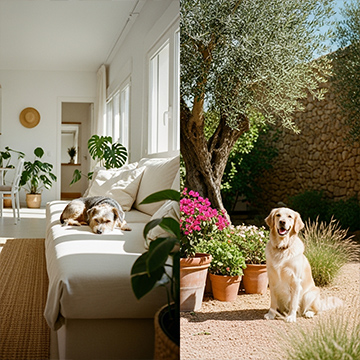 Renting with Pets. In Spain's rental market, accepting pets is typically left to the landlord's decision and must be explicitly stated in the agreement. While many listings welcome pets, sometimes landlords may require extra deposits or liability insurance for reassurance.
Buying a Home as a Pet Owner. Purchasing a property in Spain gives you the most freedom, as there are no landlord restrictions, and you can choose the ideal home with your pet's needs in mind.
Community Rules
Understanding the comunidad de propietarios rules is important, as many developments have regulations on pet ownership. These typically include certain limitations on the number, type, or noise levels. Common areas are usually where disputes arise, particularly regarding cleanliness. Keeping noise levels is also essential to avoid future conflicts.
Buying a detached house may be less restrictive than apartment living, particularly with private gardens and larger spaces. However, check local rules that may impose limitations. Whether it's pet-friendly apartments or houses in Spain, pet-proofing your home is also important for safety. So make sure to secure balconies and terraces, as well as install secure fences for the garden.
Traveling in Spain with Pets
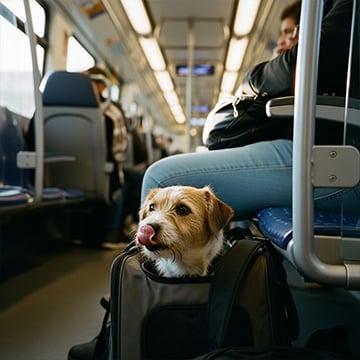 Rules about traveling with animals on public transportation vary by region, but general guidelines exist.
- Small animals in carriers are often allowed on most buses, metros, and trains. In cities like Madrid and Barcelona, metros permit dogs of any size outside peak hours,
- Larger dogs are generally not permitted, except on some lines or during specific hours, though guide and assistance dogs are always allowed.
- Some ferries and boats have designated deck areas for pets.
When traveling by car, provide a carrier with sufficient space, water access, and a secure harness or restraint system.
Pet-Friendly Destinations in Spain: Activities and Socialization
Pet-friendly beaches: Many beaches welcome dogs, particularly outside peak tourism season. Popular spots include Playa de Llevant in Barcelona, Playa de Agua Amarga in Alicante, and Playa de Pinedo in Valencia. Always check local regulations, as access may be restricted to specific months and hours.
Cafes and restaurants: Many cafes and restaurants with outdoor terraces accept pets, and some even offer water bowls and treats.
Dog parks: Spain has numerous urban parks with dog exercise zones, agility equipment, and ample running space. Check signage for leash restrictions.
Overall, Spain offers a welcoming environment for pet owners, with strong animal welfare protections and a supportive community. Whether you bring your furry friend across borders or adopt a pet in Spain, pet ownership here is both rewarding and manageable. With a clear understanding of the rules and societal expectations, living as a pet owner in Spain can be a fulfilling experience.




 EUR
EUR


